Long COVID Persistence and Surveillance Gaps Across 58 US Hospitals Long COVID Persistence and Surveillance Gaps Across 58 US Hospitals
  • Home
  • About Us
  • Technology
  • News
    • Media Coverage
    • Press Releases
    • Publications
  • Contact Us
Menu
  • Home
  • About Us
  • Technology
  • News
    • Media Coverage
    • Press Releases
    • Publications
  • Contact Us

News

Long COVID Persistence and Surveillance Gaps Across 58 US Hospitals

Abstract

IMPORTANCE Surveillance of postacute sequelae of SARS-CoV-2 infection (PASC) depends on diagnostic coding systems that capture fewer than one-half of affected individuals, rendering millions invisible to health systems and policymakers.

OBJECTIVE To quantify the gap between true PASC burden and diagnostic code–based estimates, determine the proportion representing chronic disease, and characterize organ system heterogeneity and temporal trends across diverse populations.

DESIGN, SETTING, AND PARTICIPANTS This retrospective cohort study used electronic health record data from 58 hospitals and affiliated clinics in 4 US regions, from 2017 to 2025. Adults (aged 18 years) with laboratory-confirmed SARS-CoV-2 infection or a COVID-19 diagnosis code were included. A custom artificial intelligence algorithm, the Precision Phenotyping for Research Cohorts (P2RC), was implemented using federated infrastructure.

EXPOSURE Laboratory-confirmed SARS-CoV-2 infection or COVID-19 diagnosis code.

MAIN OUTCOMES AND MEASURES The primary outcomes were PASC prevalence, the proportion classified as chronic conditions, organ system distribution, and temporal trends from 2020 to 2024. χ2 Tests were used to assess organ system heterogeneity across regions, and negative binomial regression was used to model quarterly temporal trends, yielding incidence rate ratios (IRRs) with 95% CIs.

RESULTS In this cohort study of 457 950 COVID-19 cases (mean age, 52.05 years; 275 107 [60.07%] female), the P2RC algorithm identified 74 560 PASC cases (16.28% overall; 28 585 [18.58%] in New England, 978 [19.55%] in Southeast Texas, 10 534 [22.69%] in Southern California, and 34 463 [13.64%] in Western Pennsylvania), more than 2-fold higher than the proportion identified by code-based surveillance (<7%). Of 883 International Statistical Classification of Diseases, Tenth Revision, Clinical Modification codes associated with PASC, 594 (67.27%) represented chronic or potentially chronic conditions. Of 74 560 patients with PASC, 66 587 (89.31%) developed chronic conditions requiring ongoing clinical management; this represents 14.54% of the total number of 457 950 patients with COVID-19. Substantial organ system heterogeneity was observed (χ2 = 2504.73; P < .001): New England demonstrated thyroid-predominant endocrine patterns, while Southeast Texas, Southern California, and Western Pennsylvania showed metabolic-predominant profiles. Negative binomial regression revealed increasing PASC prevalence through mid-2024 (IRR per quarter, 1.01 [95% CI, 1.00-1.01; P < .001] in New England; 1.00 [95% CI, 1.00-1.01; P < .001] in Southern California; and 1.02 [95% CI, 1.01-1.02; P < .001] in Western Pennsylvania), indicating an accumulating rather than resolving burden.

CONCLUSIONS AND RELEVANCE In this cohort study, approximately 1 in 6 patients with COVID-19 developed PASC, and 89.31% of patients with PASC had at least 1 chronic condition. Current diagnostic coding captured fewer than one-half of the cases, obscuring a substantial chronic disease burden. The persistently increasing prevalence through 2024 indicated an accumulating health care burden requiring investment in surveillance infrastructure and integrated care pathways.

LC Incidence in 58 US Hospitals_tian_2026MAY JAMA Open NetworkDownload
Read More

Innovation will provide solutions to Long COVID the new chronic disease of our time

Fox News Opinion — May 4, 2026

Dr. Robert Redfield, former director of the U.S. Centers for Disease Control and Prevention, writes in Fox News on the urgent need for innovation to address Long COVID — a condition affecting an estimated 18 million Americans. Dr. Redfield calls on Secretary Kennedy and the Trump administration to aggressively fund Long COVID research and develop effective treatments, drawing parallels to the landmark government investment that transformed HIV/AIDS from a fatal disease into a manageable one.

Read the full article on Fox News →

Innovation will provide solutions to Long CO VID — the new chronic disease of our timeDownload
Read More

Long Covid – HHS 2025-2026 National Priority

Secretary Robert F. Kennedy Jr. convenes a long COVID consortium that brings together U.S. senators, patients, clinicians, and researchers. This roundtable highlights real-world patient experiences alongside updates on clinical care, treatment research, and diagnostic innovations. The discussion emphasizes collaboration between policymakers, medical experts, and the patient community to advance understanding and improve outcomes for those affected by long COVID.

Read More

Insights into Persistent SARS-CoV-2 Reservoirs in Chronic Long COVID

Abstract

Long COVID (LC), also known as post-acute sequelae of COVID-19 infection (PASC), is a heterogeneous and debilitating chronic disease that currently affects 10 to 20 million people in the U.S. and over 420 million people globally. With no approved treatments, the long-term global health and economic impact of chronic LC remains high and growing. LC affects children, adolescents, and healthy adults and is characterized by over 200 diverse symptoms that persist for months to years after the acute COVID-19 infection is resolved. These symptoms target twelve major organ systems, causing dyspnea, vascular damage, cognitive impairments (“brain fog”), physical and mental fatigue, anxiety, and depression. This heterogeneity of LC symptoms, along with the lack of specific biomarkers and diagnostic tests, presents a significant challenge to the development of LC treatments. While several biological abnormalities have emerged as potential drivers of LC, a causative factor in a large subset of patients with LC, involves reservoirs of virus and/or viral RNA (vRNA) that persist months to years in multiple organs driving chronic inflammation, respiratory, muscular, cognitive, and cardiovascular damages, and provide continuous viral antigenic stimuli that overstimulate and exhaust CD4+ and CD8+ T cells. In this review, we (i) shed light on persisting virus and vRNA reservoirs detected, either directly (from biopsy, blood, stool, and autopsy samples) or indirectly through virus-specific B and T cell responses, in patients with LC and their association with the chronic symptomatology of LC; (ii) explore potential mechanisms of inflammation, immune evasion, and immune overstimulation in LC; (iii) review animal models of virus reservoirs in LC; (iv) discuss potential T cell immunotherapeutic strategies to reduce or eliminate persistent virus reservoirs, which would mitigate chronic inflammation and alleviate symptom severity in patients with LC. 

Review on Virus Reservoirs in Long COVID Oct2025Download
Read More

COVID Expert to Chair TechImmune

Orange County Business Journal – September 8th, 2025

OCBJ Article - COVID Expert to Chair TechImmune
Read More

TechImmune Prepares to Start Clinical Trials

Orange County Business Journal – September 8th, 2025

OCBJ Article - TechImmune Prepares to Start Clinical Trials
Read More

JAMES F. YOUNG, PhD APPOINTED EXECUTIVE CHAIRMAN OF TECHIMMUNE

JAMES F. YOUNG, PhD

Executive Chairman of TechImmune, effective August 1,2025.

Dr. Young brings an extraordinary depth of experience in vaccine science, immunology, and pharmaceutical development, with more than 40 years of leadership across academia, government initiatives, and the biotechnology industry. He has been a driving force in advancing vaccine innovation, regulatory strategy, and global health impact.

He was involved in the Operation Warp Speed effort, the U.S. government’s coordinated initiative to accelerate the development, manufacturing, and distribution ofCOVID-19 vaccines during the height of the pandemic. He served as the Novavax Board of Directors Chairman in from 2011, until March of this year as the company emerged as a leading innovator with the development of Nuvaxovid, the only protein-based SARS CoV-2 vaccine marketed worldwide. Prior to Novavax, he served as President of Research and Development at MedImmune, where he oversaw the development of multiple products including, FluMist, the first intranasal influenza vaccine and Synagis to prevent respiratory synticial virus disease which was the first monoclonal antibody marketed for an infectious disease.

In 2005, he was honored with the Albert B. Sabin Humanitarian Award in recognition of his contributions to public health. Earlier in his career, Dr. Young helped establish and lead the Department of Molecular Genetics at SmithKline and French Laboratories (now part of GlaxoSmithKline) and served as a faculty member in the Department of Microbiology at Mount Sinai School of Medicine in New York City.

He holds a Bachelor of Science degrees in Biology and General Sciences from Villanova University and earned his Ph.D. in Microbiology and Immunology from Baylor College of Medicine in Houston, Texas. His expertise, vision, and unwavering commitment to medical innovation will be instrumental as TechImmune advances its mission to deliver transformative solutions for Long COVID and other immune-mediated conditions.

Please join us in welcoming Dr. James Young to TechImmune.

TECHIMMUNE was formed in 2021 and is developing a treatment for Long COVID- a medically urgent condition affecting over 10 million Americans for which no FDA-therapies currently exist. Using technology invented by Dr. Lbachir BenMohamed, a professor at University California, Irvine, the project has been a joint UCI-TechImmune effort, with animal model results meeting our initial expectations. We are now preparing to bring this program to the clinical testing stage. We believe our proven technology platform offers a novel immunological approach to this critical unmet medical need.

Read More

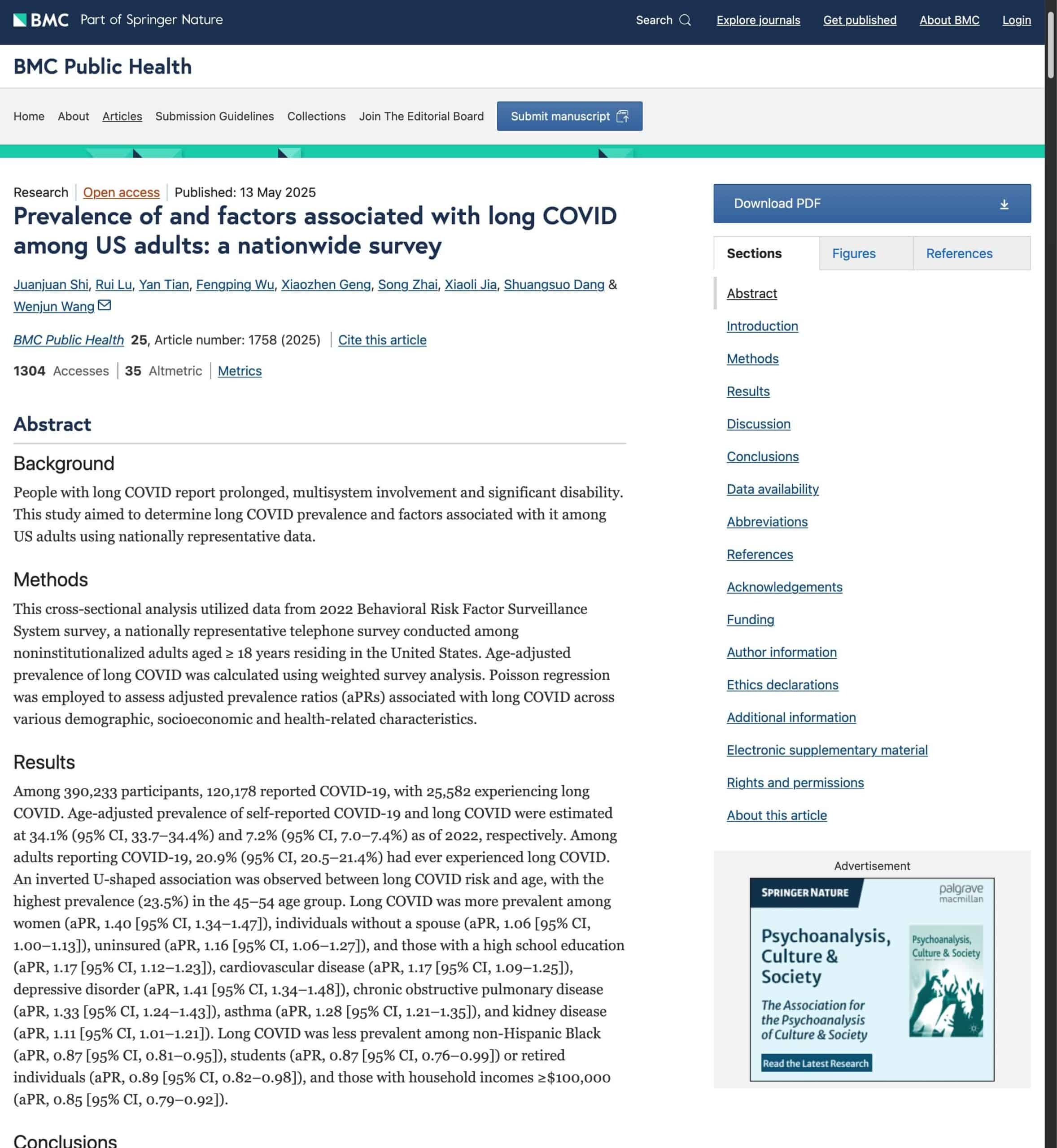
BMC Public Health – “Prevalence of and factors associated with Long COVID among US adults: a nationwide survey”

A cross‑sectional study using the 2022 Behavioral Risk Factor Surveillance System reports a 7.2 % age‑adjusted prevalence of Long COVID in US adults and 20.9 % among those with a history of COVID‑19.

BMC Public Health – “Prevalence of and factors associated with Long COVID among US adults: a nationwide survey”
Read More

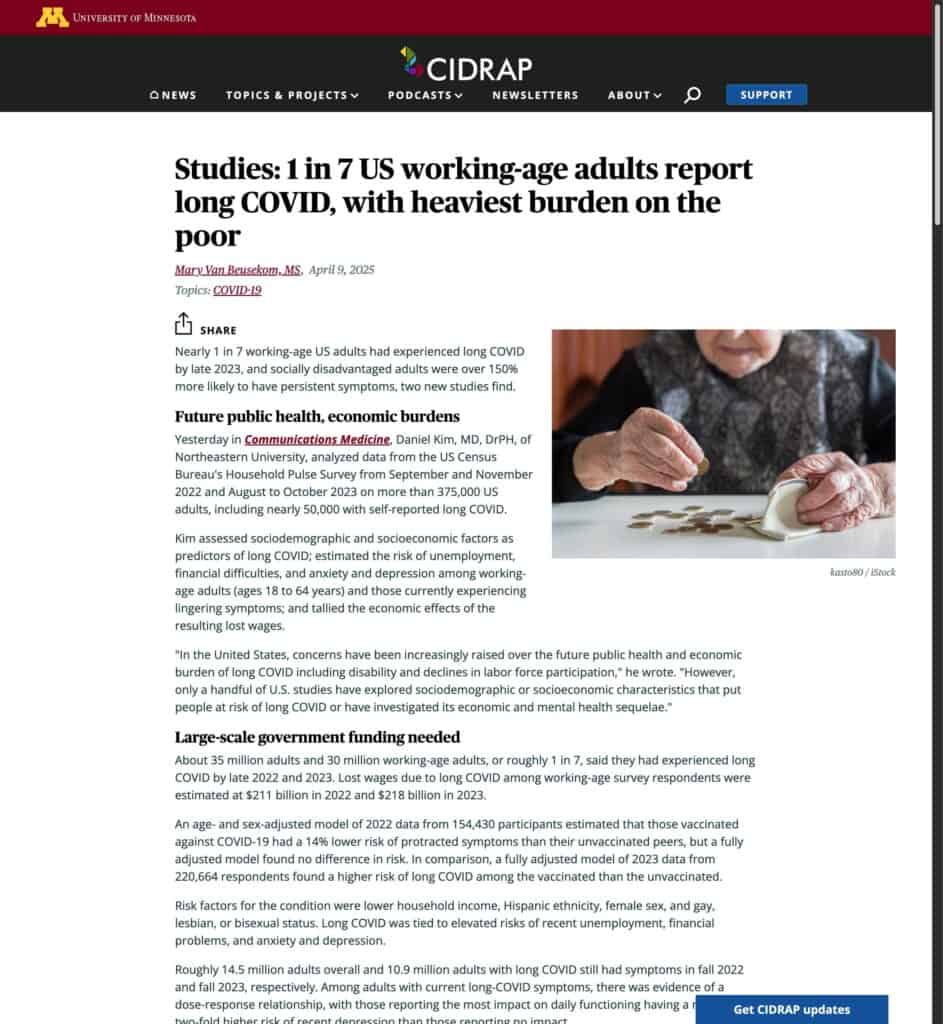
CIDRAP – “Studies: 1 in 7 US working-age adults report Long COVID, with heaviest burden on the poor”

Analysis of Census Bureau Household Pulse Survey data indicates about 35 million US adults (1 in 7 working-age adults) had experienced Long COVID by late 2023, with lost wages estimated at $211 billion–$218 billion.

CIDRAP – “Studies: 1 in 7 US working-age adults report Long COVID, with heaviest burden on the poor”

Read More

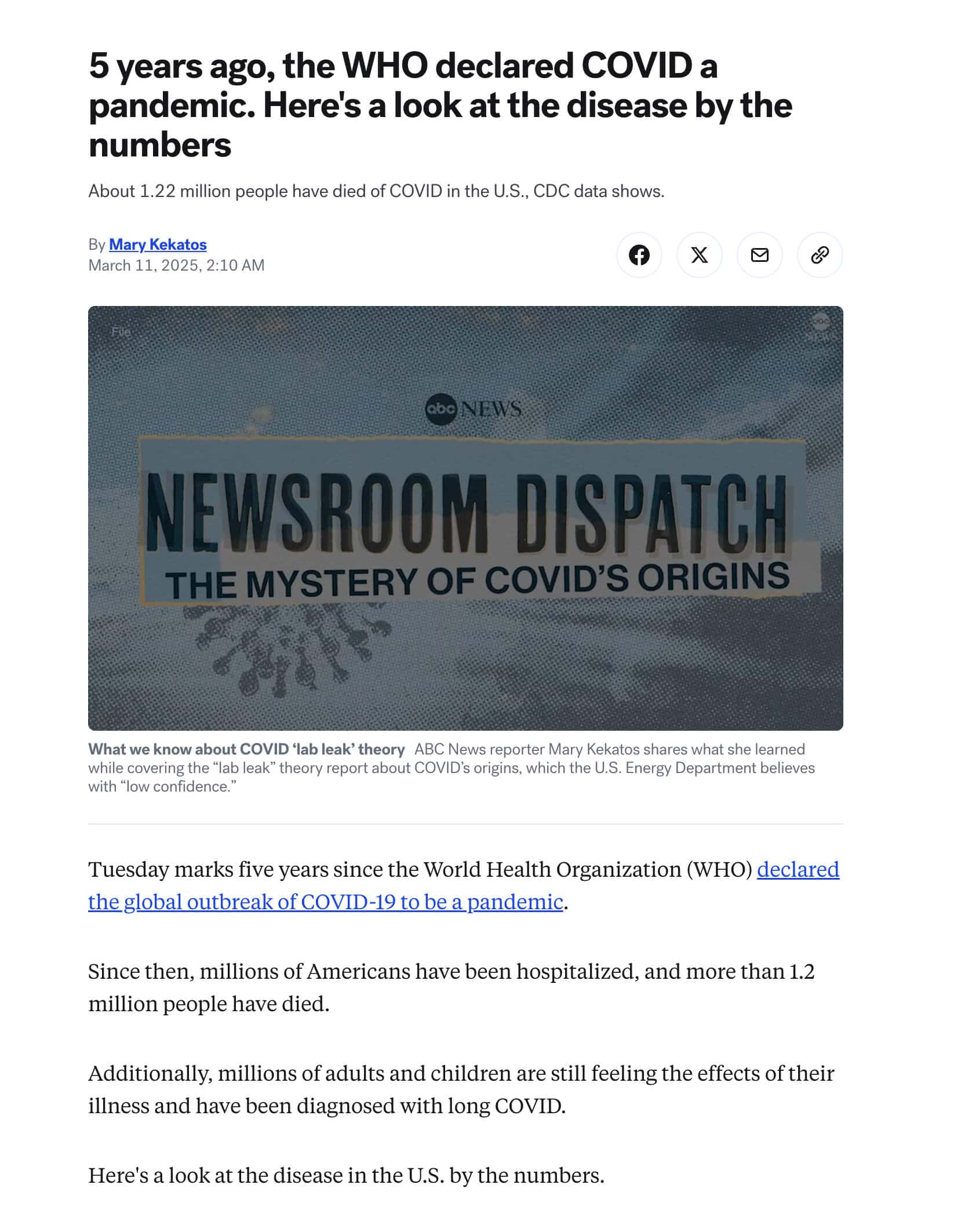
ABC News – “5 years ago, the WHO declared COVID a pandemic. Here’s a look at the disease by the numbers”

According to a federal survey, 17.9 % of US adults (~47.6 million people) have experienced Long COVID, and 5.3 % (~14.1 million) are currently living with the condition. The article also notes that about 1.01 million children (1.4 %) have had Long COVID.

5 years ago, the WHO declared COVID a pandemic. Here’s a look at the disease by the numbers
Read More

Recent Posts

  • Long COVID Persistence and Surveillance Gaps Across 58 US HospitalsMay 27, 2026
  • Innovation will provide solutions to Long COVID the new chronic disease of our timeMay 4, 2026
  • Long Covid – HHS 2025-2026 National PrioritySeptember 28, 2025
  • Insights into Persistent SARS-CoV-2 Reservoirs in Chronic Long COVIDSeptember 27, 2025
  • COVID Expert to Chair TechImmuneSeptember 8, 2025

Posts pagination

1 2 »
© 2022 TechImmune, Inc. All rights reserved.
  • Privacy Satement
  • Terms of Use
  • Cookie Policy
  • Disclaimer
Manage Cookie Consent
To provide the best experiences, we use technologies like cookies to store and/or access device information. Consenting to these technologies will allow us to process data such as browsing behavior or unique IDs on this site. Not consenting or withdrawing consent, may adversely affect certain features and functions.
Functional Always active
The technical storage or access is strictly necessary for the legitimate purpose of enabling the use of a specific service explicitly requested by the subscriber or user, or for the sole purpose of carrying out the transmission of a communication over an electronic communications network.
Preferences
The technical storage or access is necessary for the legitimate purpose of storing preferences that are not requested by the subscriber or user.
Statistics
The technical storage or access that is used exclusively for statistical purposes. The technical storage or access that is used exclusively for anonymous statistical purposes. Without a subpoena, voluntary compliance on the part of your Internet Service Provider, or additional records from a third party, information stored or retrieved for this purpose alone cannot usually be used to identify you.
Marketing
The technical storage or access is required to create user profiles to send advertising, or to track the user on a website or across several websites for similar marketing purposes.
  • Manage options
  • Manage services
  • Manage {vendor_count} vendors
  • Read more about these purposes
View preferences
  • {title}
  • {title}
  • {title}